
Method calls, the details

public class Circle {
  static final double
    PI = 3.141592653589793;
  double r;
  /** Change a circle's area
   *  @param area The desired new area
   *  @return The circle's new radius */
  double setArea(final double area ❶) {
    double val ❷ = area  / PI ❸;
    return ❹ r ❺ = Math.sqrt(val);
  }
} |
|||||
|
|
Class scope (static)
|
Application process |
| Instance scope | Object lifetime: new
(...) until being garbage collected.
|
| Method scope | Method invocation until return.
|
- Heap memory
-
-
Allocation of class or array instances:
new String()new float[200] -
De-allocation subject to garbage collection.
-
- Execution stack
-
-
One instance per process thread.
-
Hosting variables (values or references)
-
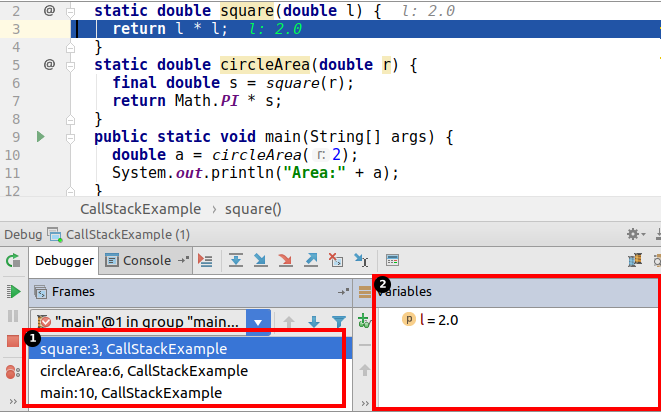
|
❶ |
Three call stack frames corresponding to
|
|
❷ |
Local variables corresponding to selected stack frame. TipIn the above example you may select stack frame “circleArea” showing its local variables while leaving your debugger resting at line 3. |
