
Using automated tests.
Figure 201. Response to coding errors 
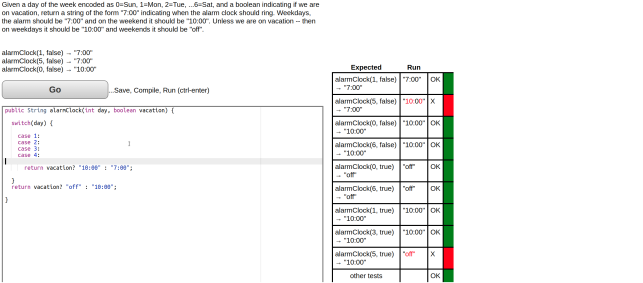
Figure 202. Unit test concept
-
Will be explained in detail.
-
Idea: Feed in samples, check results for correctness.
-
Previous slide: Logic-1 > alarmClock
-
Sample project at MI Gitlab.
Figure 203. alarmClock(...) with errors
public class AlarmClock {
  /** Given a day of the week encoded as 0=Sun, 1=Mon,...
   */
  static ❶ public String alarmClock(int day, boolean vacation) {
    switch (day) {
      case 1:
         ...
    if (vacation) {
      return "off";
    } else {
return "10:00"; ...|
The static keyword is required here as being explained in the section called “Class members and methods”. |
Figure 204. Testing alarmClock(...)
public class AlarmClockTest {
  @Test ❶
  public void test_1_false() {
         Assertions.assertEquals( "7:00", AlarmClock.alarmClock(1, false));
  }                                 ▲                           ▲    ▲
  ...                               ┃                           ┃    ┃
                              Expected result               Input parameter
  @Test                             ┃                           ┃    ┃
  public void test_0_false() {      ▼                           ▼    ▼
         Assertions.assertEquals("10:00", AlarmClock.alarmClock(0, false));
} ...|
Explanation in the section called “Unit testing”. |
Figure 205. Testing alarmClock(...) details
public class AlarmClockTest {                    Input parameter
  @Test                                              ┃    ┃
  public void test_1_false() {                       ▼    ▼
         final String result = AlarmClock.alarmClock(1, false);
                        ┗━━━━━━━━━━━━━━━━━━━┓
                                            ▼
         Assertions.assertEquals( "7:00", result);
  }                                 ▲
  ...                               ┃
                          Expected result