


- Core Classes
-
Superclass of all Java™ classes.
-
Common methods to be redefined by derived classes.
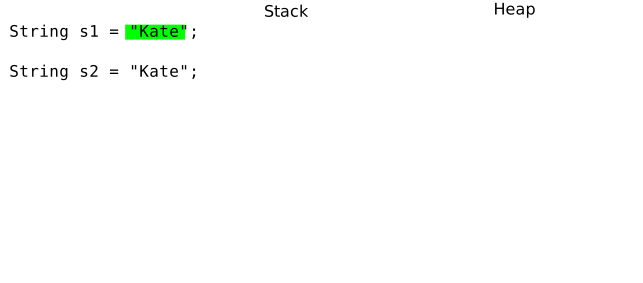
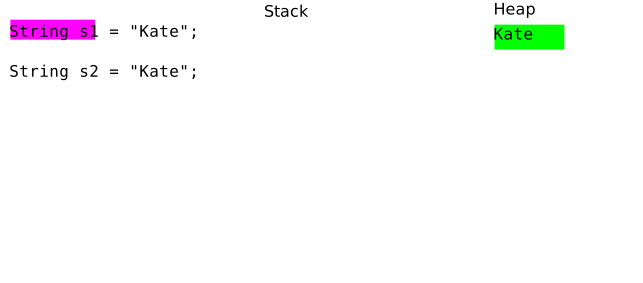
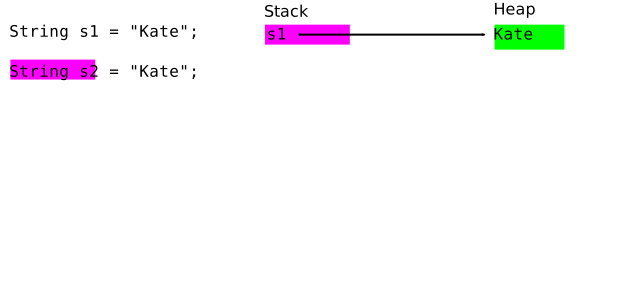
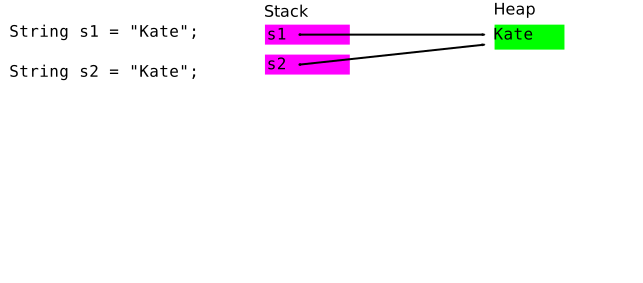
Implementation of
java.lang.String:
public final class String ... {
  private final char value[];
  private int hash;
  private static final long serialVersionUID = -6849794470754667710L;
...
}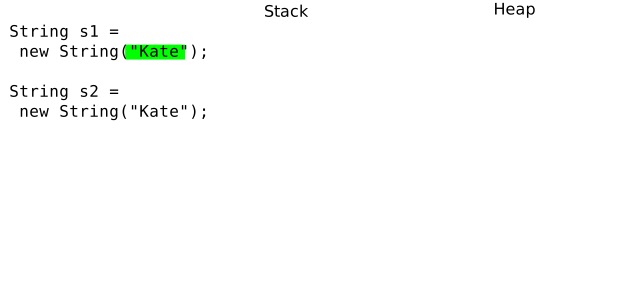
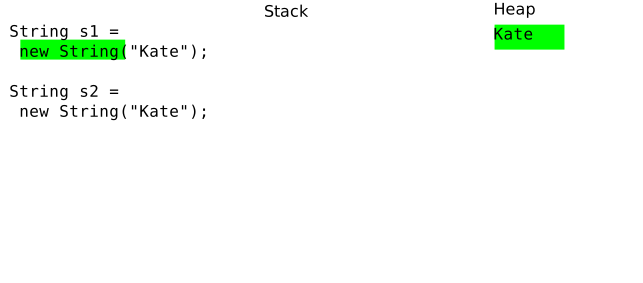
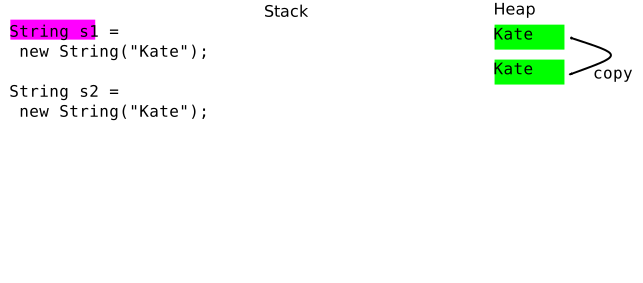
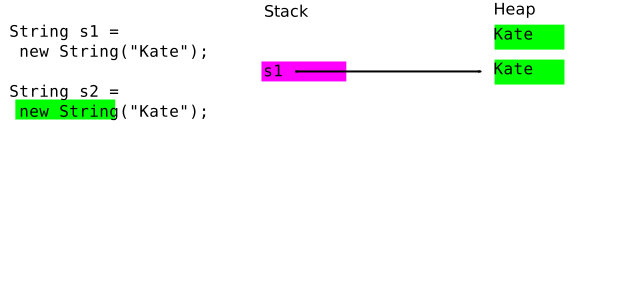
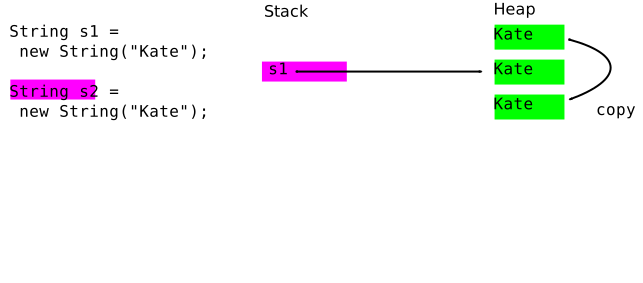
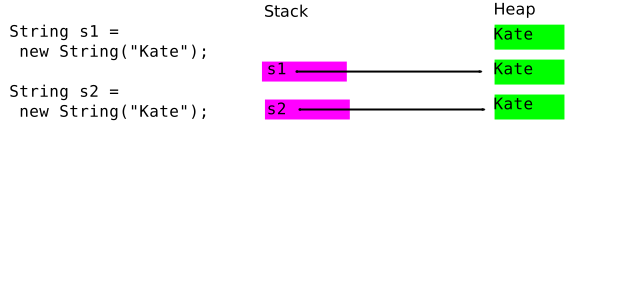
| Primitive type | Object |
|---|---|
|
|
==: true |
==: false equals: true |
-
The
==operator acting on primitive types compares expression values. -
The
==operator acting on objects compares for equality of reference values and thus for object identity. -
The
==operator acting on objects does not check whether two objects carry semantically equal values. -
The
equals()method defines the equality two objects.
-
Each object is equal by value to itself:
object1 == object2⇒object1.equals(object2) -
The converse is not true. Two different objects may be of common value:
Code Result String s = "Hello", copy = new String(s); IO.println("equals: " + s.equals(copy)); IO.println(" ==: " + (s == copy));equals: true ==: false
Implementation at https://github.com/openjdk/ .../String.java :
public final class String ... {
public boolean equals(Object anObject) {
  if (this == anObject) {
    return true;
  }
  return (anObject instanceof String aString)
    && (!COMPACT_STRINGS || this.coder == aString.coder)
    && StringLatin1.equals(value, aString.value);
}- Core Classes
- ➟ Using class
Math
- ➟ Using class
| Code | Result | Math notation |
|---|---|---|
|
0.8939966636005579 == sin(90.0) |
|